
Arkansas Court Record Requests
Try Search ARCourts first when a court makes Arkansas case information public there. Remember that a search result is not the official file. District Court coverage is only partial. The county Circuit Clerk keeps Circuit Court records. The local District Court clerk keeps the lower-court ones. The county directory maps out local routes for each county. Once you know the office, records may be inspected online, at a counter, or on a public terminal. You can also request them by phone, mail, email, or a local copy portal. Ask about hours, fees, payment, and delivery before you go. Arkansas FOIA requests go to the office holding the record. Court files also follow Administrative Order 19.
This county clerk homepage shows a local case lookup linking to the statewide search.

For Arkansas cases, the local link is only a door. The clerk still supplies the filed document, the missing entry, and the certified copy.
- Read the court and case number from the citation, summons, order, or other paper.
- Search ARCourts by case or citation number, participant, and available court filters.
- Use the Arkansas court and location to identify the custodian. Circuit files go to the Circuit Clerk; District files stay with the local court clerk.
- Specify a docket inspection, plain copy, filed document, or certified copy. Follow local instructions for online, counter, phone, mail, or email requests.
- Send an Arkansas FOIA request to the custodian when appropriate, and account for the separate court-record access rule.
- Contact the appellate clerk for an appeal or AOC research staff for compiled statewide statistics.
A statewide search may find an Arkansas case, but the court that created the file controls the next step. Go there for anything official.
Arkansas Court Record Copies Compared
An Arkansas court record might be a public case summary. It might be a dated docket entry. Or it might be the filed pleading itself. It might also be a clerk-certified copy, which carries its own weight. A screen print or a downloaded image can help you explain a case to someone. But printing from a court portal does not make it certified. Certification is something the clerk does.
| Record type | What it provides | Where to confirm or request |
|---|---|---|
| Public case information | Available case identifiers, participants, filings, charges or dispositions, future events, and judgments, depending on court and case. | Search ARCourts if the court supplies public case detail. |
| Docket or case history | A chronological view of filings, actions, and recorded events. The visible entries can differ by court. | Portal or the clerk that keeps the case. |
| Filed document | A specific complaint, motion, order, judgment, exhibit, or other item in the case file. | Linked image when public and available, or the filing court's clerk. |
| Certified copy | A clerk-authenticated copy bearing the official certification or seal process. | The clerk with custody of the official record. |
Name the item when you ask. Request the specific Arkansas docket, filing, or judgment you need. Give the case number, the document title or event, and an approximate date. Arkansas clerks can explain copy types and the local steps for Arkansas records.
Note: An Arkansas docket entry can identify a paper. But the clerk's copy process decides whether it is certified.
Arkansas Court Record Types
Arkansas case files can contain dockets, pleadings, motions, exhibits, orders, and judgments. Search ARCourts shows filing titles and some images. Contexte stores the case information while document images may sit in linked systems. So a result does not prove the full file is online.
The Circuit Clerk holds Circuit Court files in Arkansas. Local District Court clerks keep lower-court records. The appellate clerk keeps Supreme Court and Court of Appeals records. Federal cases use federal clerks and federal systems. They sit outside Search ARCourts entirely.
Note: Arkansas state-court records and federal-court filings use different systems, clerks, and fees.
Arkansas Federal Court Records Stay Separate
Federal civil and criminal filings in Arkansas belong to the U.S. District Court for the Eastern District. That happens when a case falls there. Its clerk and CM/ECF system share nothing with state Circuit and District Courts. Which federal district is correct? It depends on the case's division and location. Follow the federal court's guidance before requesting a record.
The Eastern District of Arkansas lists federal court locations and clerk access for its divisions.
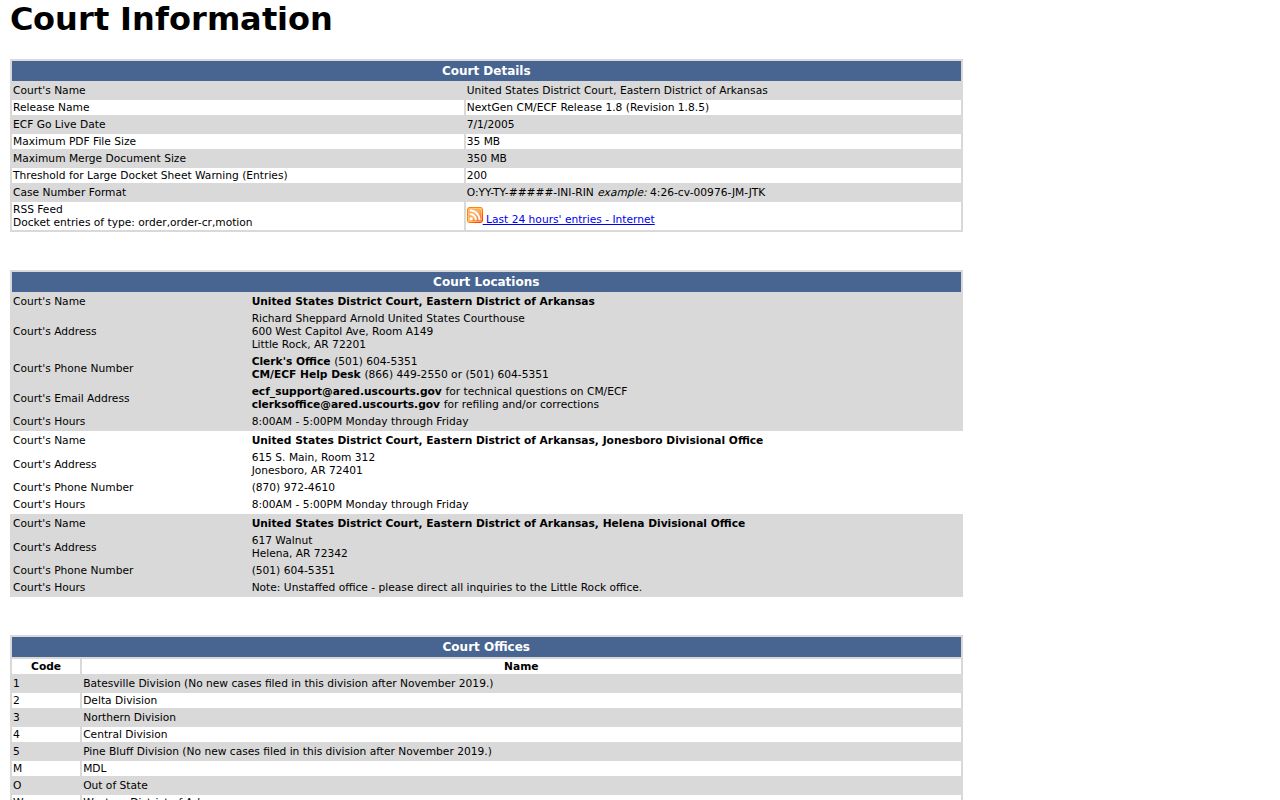
Federal case papers must come from the federal court or PACER. Arkansas state case papers stay with the state court clerk.
What an Arkansas Court Record Holds
A public Arkansas result may show participants. It may show the judge, filings, charges or dispositions, future events, and judgments. How much you see depends on court participation, case type, access status, and document imaging. Contexte also stores fields for dates, location, division, event status, plea, sentence, fine, and restitution. Those fields are data points, not public-screen promises.
| Case ID or citation | The court's identifier; formats vary by court and year, so copy the full number from court papers. |
|---|---|
| Participants and judge | Names and case roles may be shown, with labels depending on the type of matter. |
| Filings and events | Dated titles or entries may identify a filing, action, or future event. A full document image may not be linked. |
| Charges and disposition | Criminal and traffic details may include charges and recorded dispositions; a charge alone is not a finding of guilt. |
| Judgment or order | A judgment entry may appear without the signed or certified document. |
| Access and security | Restricted cases and protected material may be limited or absent from public search. |
Read filing dates carefully in Arkansas case records. A filing date is the date the item was entered. It is not automatically a hearing, service, or decision date. When an entry matters, ask the clerk to confirm it.
Note: Internal Arkansas case-system fields describe possible data. They are not a promise that every public record displays each value.
When Arkansas Court Records Have No Image
In Arkansas, a filing title with no PDF does not mean the paper was never filed. Courts link Contexte to document-management systems. Even so, images may not be scanned, public, or available through the portal. A docket can list an order without showing its text.
Write down the court, case number, filing title, and date. Then ask the Circuit Clerk or District Court clerk whether the item is imaged, archived, on paper, or restricted. Older Arkansas cases may predate Contexte. An implementation date does not show that every prior file was imported. FOIA does not unseal a record.
Note: A case appearing in Search ARCourts confirms that some case information is available. It does not confirm that every pleading or image can be opened remotely.
Court Record Fees in Arkansas
Arkansas sets no single statewide price for plain copies or portal images. Ark. Code Ann. §21-6-402 lists a $5 Circuit Clerk certification and seal amount. §16-17-124 sets at least $5 per case to prepare and certify specified District Court records. Those are separate Arkansas charges. They are not a statewide page-copy rate.
| Record or service | Statewide amount or rule | What to confirm |
|---|---|---|
| Search ARCourts result | No public-view charge is stated in the guide. | Whether the court participates and whether the entry answers the request. |
| Plain court copy | No single statewide Arkansas per-page amount was located. | Local charge, format, and delivery with the clerk. |
| Certified Circuit Court copy | The Arkansas statutory schedule lists a $5 certification/seal amount. | Exact item, copy charge, and local process under §21-6-402. |
| Certified District Court docket or record | At least $5 per case for preparing and certifying specified Arkansas records. | Any permitted additional copying or preparation amount under §16-17-124. |
| Transcript | No single Arkansas reporter transcript rate was verified statewide. | Reporter or court estimate, format, length, and delivery time. |
| Arkansas FOIA copy | Actual reproduction cost; advance payment may be requested if the estimate exceeds $25. | Whether FOIA applies to the custodian and whether court-access rules also control. |
Arkansas appellate filing fees follow the appellate clerk's separate schedule.
Arkansas Appellate Copy Fees Follow the Clerk
Arkansas appellate records sit with the Supreme Court and the Court of Appeals. Each court keeps its own files. The published fee schedule sets $165 for a conventional civil or misdemeanor appeal. An electronic-record appeal costs $185. A felony appeal carries no filing charge. Review or rehearing petitions in specified categories cost $25. Treat these as appellate filing fees, not county copy charges. Confirm the current schedule before filing.
The appellate Clerk of the Courts posts the filing information and fee amounts for Arkansas appellate records.
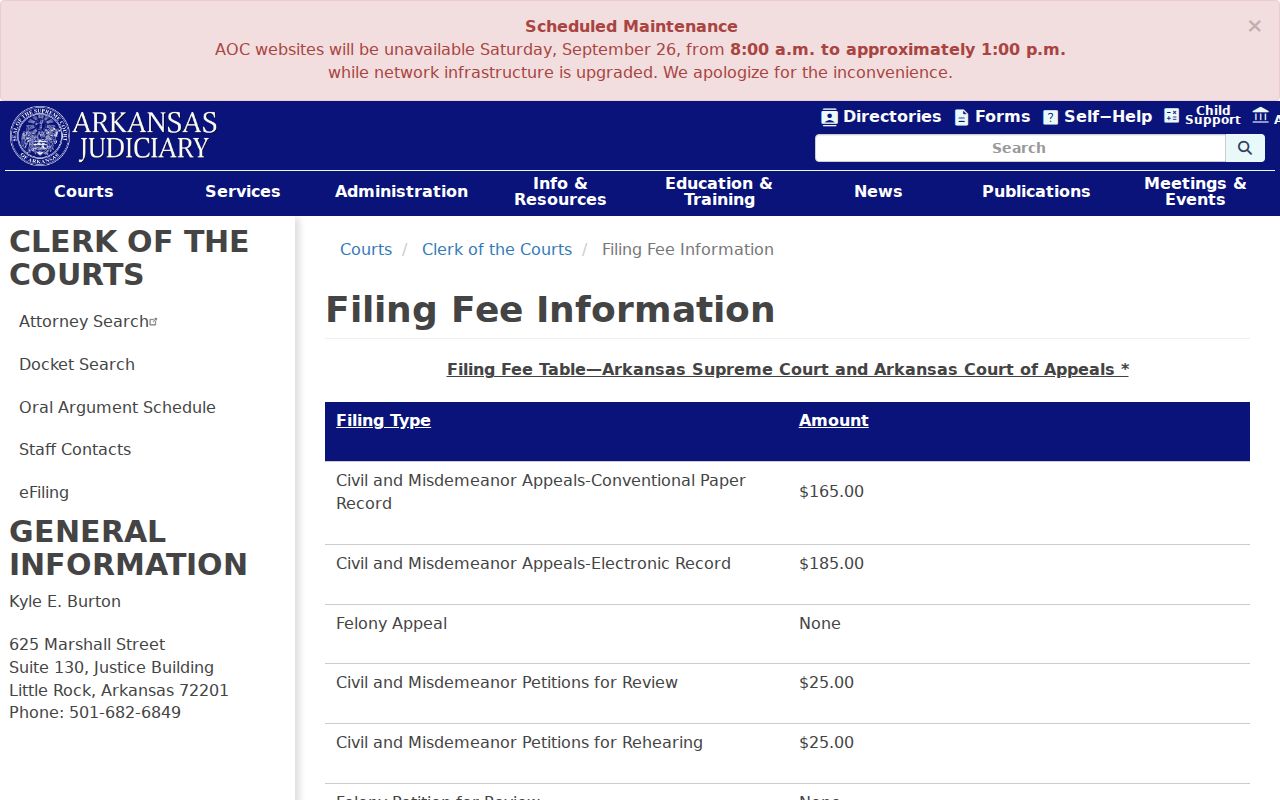
Trial-level filings work differently. For an Arkansas trial filing, contact the Circuit Clerk or the District Court clerk; appellate fees say nothing about county copy prices.
Arkansas Circuit and District Court Record Custodians
In Arkansas, record custody follows the court level. The Circuit Clerk holds Circuit Court files. These cover criminal, civil, domestic-relations, probate, and juvenile matters. Traffic, misdemeanor, ordinance, preliminary-felony, and limited-civil records sit with the local District Court clerk arrangement. Each office sets its own hours, request methods, and copy charges. The statewide Circuit Clerk directory points you to the right Arkansas county office. Use it for Circuit Court records.
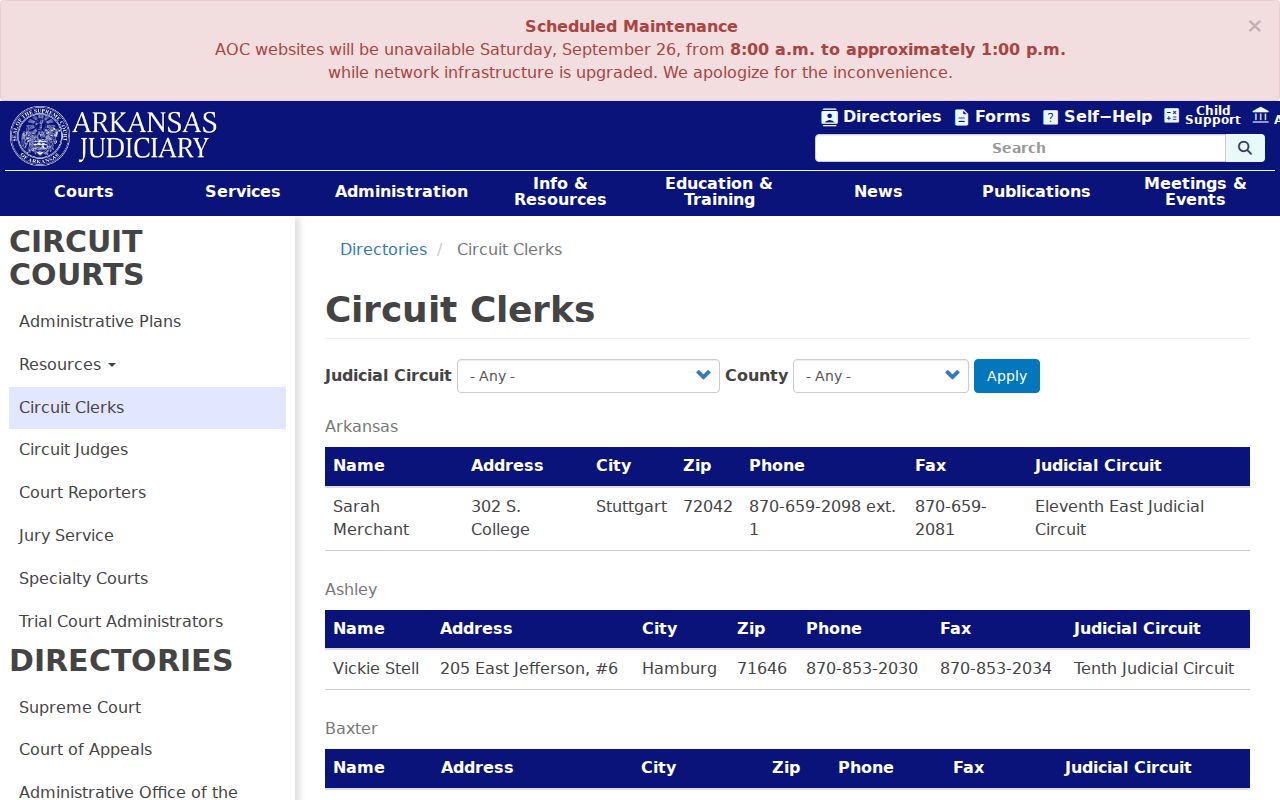
Use the Arkansas AOC District Court directory to find the lower-court office and confirm its access process.
One Arkansas Court Copy Example
One clearly labeled local example is the Pulaski County Records Department, which publishes its certified-copy process. That office charges $5 per certified copy. Delivery is by pickup or U.S. mail only. Email delivery is not offered. Payment can go online or by mailed check or money order. Those rules bind that office alone. No statewide copy price, turnaround time, or delivery rule follows from them.
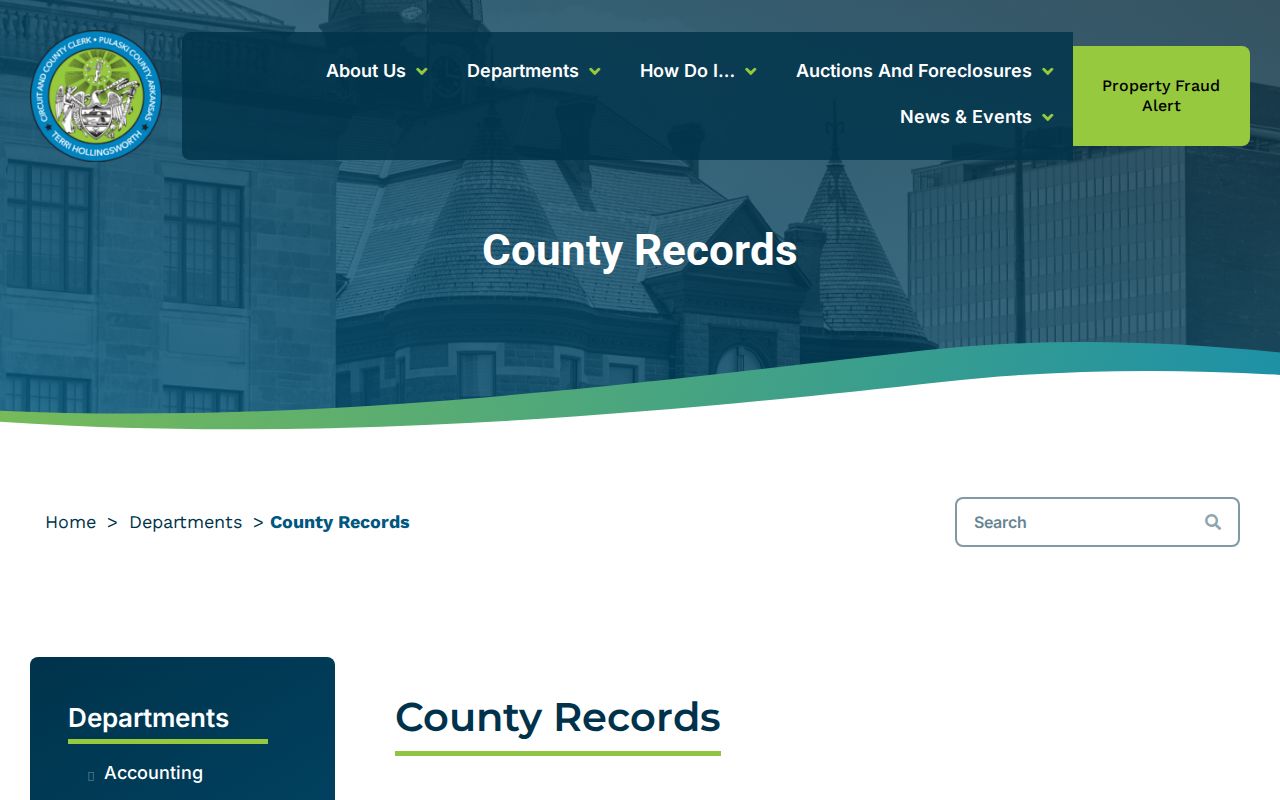
Other Arkansas clerk offices set their own fees, forms, and delivery channels. Check the correct county and court listing before you send any payment.
Arkansas Record Access and Sealing
Two rule sets govern Arkansas record access. The Arkansas Freedom of Information Act covers public records held by state and local bodies. Court files also answer to Arkansas Supreme Court Administrative Order 19. A FOIA request cannot cancel a sealing order or open material the court has excluded.
FOIA usually demands an Arkansas-citizen requester and a custodian response within three business days. The Attorney General's guidance notes that a response may simply describe a denial or the next step. It does not have to deliver copies. Copy charges track actual reproduction cost, and advance payment can be required above $25. AO19's ordinary access route skips the citizenship test and asks no purpose statement.
Key Arkansas access rules:
Ark. Code Ann. §25-19-101 et seq. provides Arkansas's general public-record request rules, subject to statutory exemptions.
Arkansas Supreme Court Administrative Order 19 governs access to court records, including remote access and court-record exclusions.
Ark. Code Ann. §9-35-204 and the New Juvenile Code protect juvenile-court records, with controlled exceptions.
Ark. Code Ann. §16-90-1401 et seq. governs adult criminal-record sealing; eligibility depends on the statute and court action.
AO19 shields certain material. The list includes full Social Security numbers, financial account details, sealed content, specified addresses, juvenile information, and anything else made nonpublic by law or order. Some sealed cases never show up in public search at all. Getting at excluded information can require a written, notarized showing that a court then weighs.
If Arkansas access is denied, ask which rule controls and what court process applies. FOIA review and an AO19 application are separate routes. Only the court can grant access to the material it protects.
Arkansas Court Transcript and Archive Records
An Arkansas docket can note that a transcript was ordered yet never contain the text. For the transcript itself, ask the Arkansas court reporter. The court's appellate or trial-record process is another route. Rate, format, and delivery all depend on the proceeding.
Older case files may predate Contexte. Contexte reached Circuit Courts county by county between 2008 and 2015. Arkansas archives may live on paper, microfilm, or local indexes. A clerk-assisted search is often the only route. The state sets no uniform retrieval time or retention schedule. Give the court, the year, and the case number if you have it. Then ask the county directory-listed custodian to search the archive.
Note: a docket can prove a hearing happened. It may not preserve the spoken record or the reporter's transcript.
Western Arkansas Federal Dockets Use PACER
The U.S. District Court for the Western District of Arkansas keeps its own records. Its clerk files sit outside the state system. Search ARCourts does not carry these filings. Use the federal court's Arkansas division information to find the correct record. The Western District of Arkansas provides its federal court, clerk, and CM/ECF information.
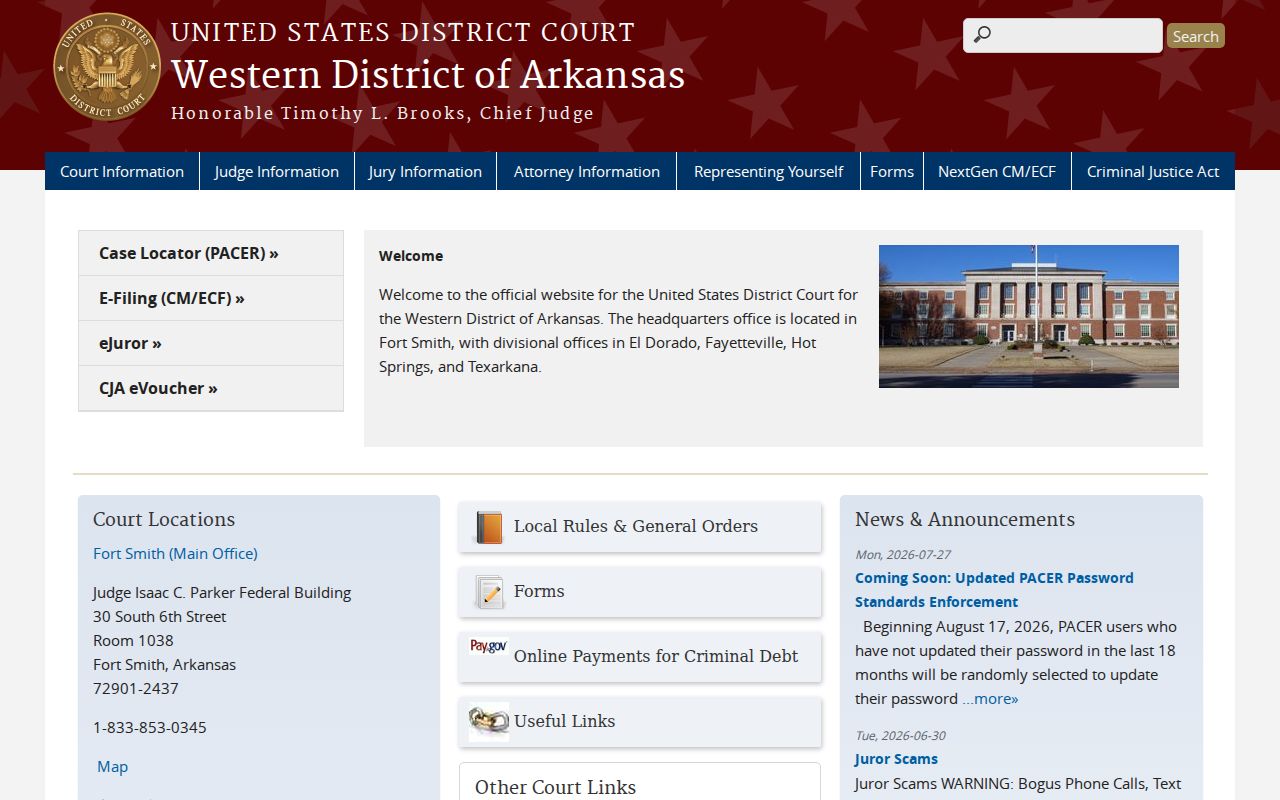
Need an Arkansas state trial record instead? Contact the Circuit Clerk or the local District Court clerk.
Federal Court Records and Arkansas Fees
Arkansas federal court records run through PACER and the federal courts' CM/ECF systems. They do not run through Search ARCourts. The federal clerk holds the case file. PACER's listed charge is $0.10 per page. It is capped at $3 for most case-specific documents and reports, and a quarterly total of $30 or less is not billed. Opinions, public-terminal use, transcripts, and certain searches follow separate rules. The federal judiciary has announced a temporary increase effective January 1, 2027. The new rate is $0.12 per page with a $40 quarterly threshold. The PACER pricing page explains current charges. Check the 2027 fee notice before you rely on the future rate.
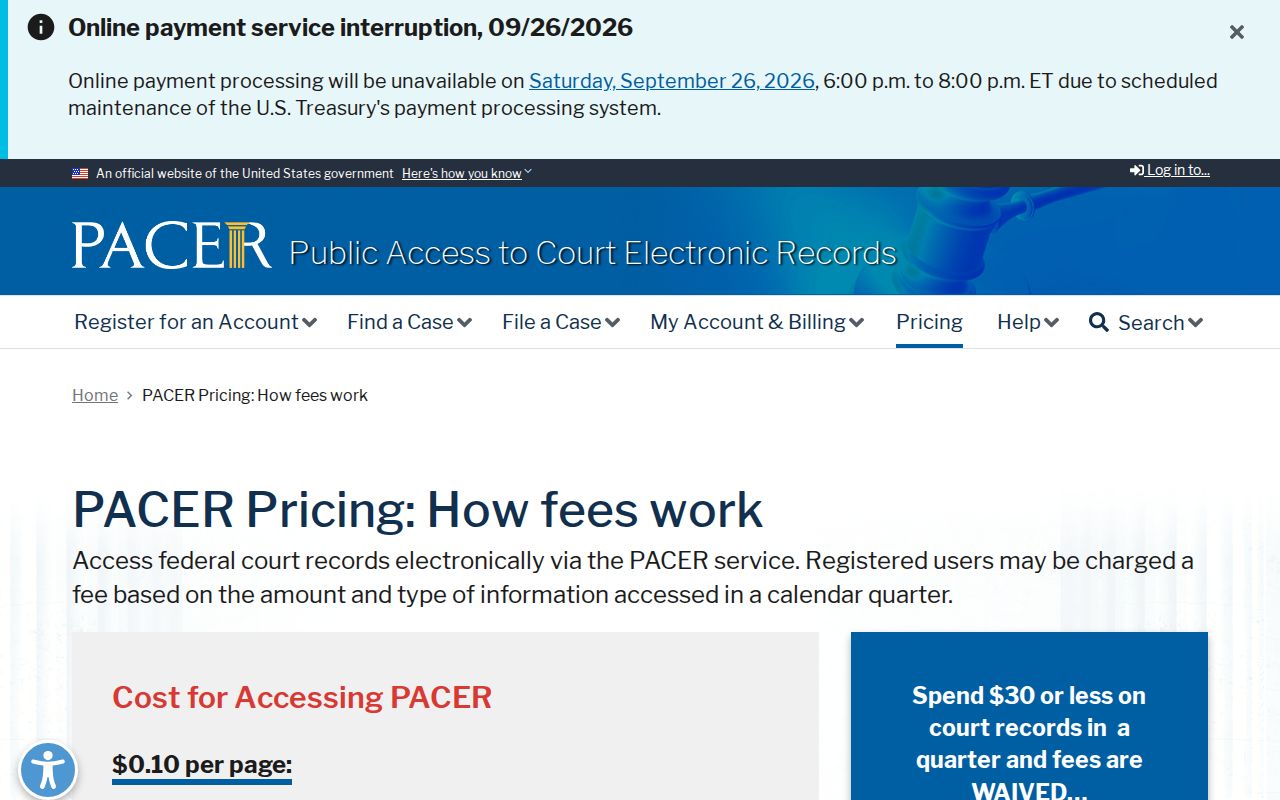
Federal filings work differently. Pick the right district first, then order through that court's clerk or PACER. No Arkansas state clerk can certify a federal document. For a copy of an Arkansas case, go to the office that actually keeps the docket. That means the Circuit Clerk, a District Court clerk, or the appellate clerk. Want numbers pulled together statewide? That request belongs with the Office of Justice Statistics, not a county case-copy desk. One more caution: federal page charges and state certification fees come from separate fee systems. Never combine them in a single estimate.