
How Arkansas Courts Are Organized
The court structure in Arkansas stacks trial and appellate work in tiers. Circuit Court serves as the general-jurisdiction trial court. District Courts hear defined lower-court matters covering a city, a county, or several counties at once. Above them sit the Arkansas Court of Appeals, which takes assigned appeals. The Arkansas Supreme Court is the highest court in the state. Federal courts run separately with clerks of their own.
The official counts tell you the scale. The 2026 AOC report and judicial-circuit map lists 75 counties, 28 judicial circuits, and 126 Circuit Court judges. District Courts count 41 districts and 70 judges under figures dated January 1, 2025. The two systems report separately. Their numbers cover different court units and different reporting dates.
Each tier also keeps its own records. Circuit Clerk offices hold the Circuit Court files. The local District Court clerk keeps lower-court records. The appellate Clerk of the Courts holds Supreme Court and Court of Appeals records. One caution: a case that moves between courts can leave related but separate docket records. Each is held by a different clerk.
Arkansas Circuit Courts Have Five Divisions
Each Arkansas Circuit Court has five divisions: criminal, civil, domestic relations, probate, and juvenile. The county Circuit Clerk keeps those case files. District Courts take traffic matters, misdemeanors, ordinance violations, preliminary felony proceedings, and limited civil cases. The civil cap is $25,000. Small claims stop at $5,000, subject to statutory exceptions. Always check the court named on the summons or filing before searching a docket.
- Circuit Court
- Arkansas's general-jurisdiction trial court, with five subject divisions and county Circuit Clerk records.
- District Court
- A limited-jurisdiction trial court for matters such as traffic, misdemeanors, ordinances, preliminary felony proceedings, and specified civil cases.
- Appellate docket
- A separate case record for an appeal, held by the appellate clerk after the trial-court appeal process begins.
Amendment 80 unified this modern structure and handed administrative authority over the judiciary to the Arkansas Supreme Court. Even so, jurisdiction and record custody still turn on the case type and the filing court. Division labels describe Circuit Court work; they say nothing about whether a document image is public online.
The Statewide Portal for Arkansas Cases
Search ARCourts is the Arkansas Judiciary's public portal for case information from courts using Contexte. A result can list participants, the judge, filings, charges and dispositions, future events, judgments, and some document links. Remember what it is not. The portal is a statewide index. It is not every Arkansas docket or filed image.
The blank Arkansas Search ARCourts landing view is the current statewide starting point. Use it for a case lookup.
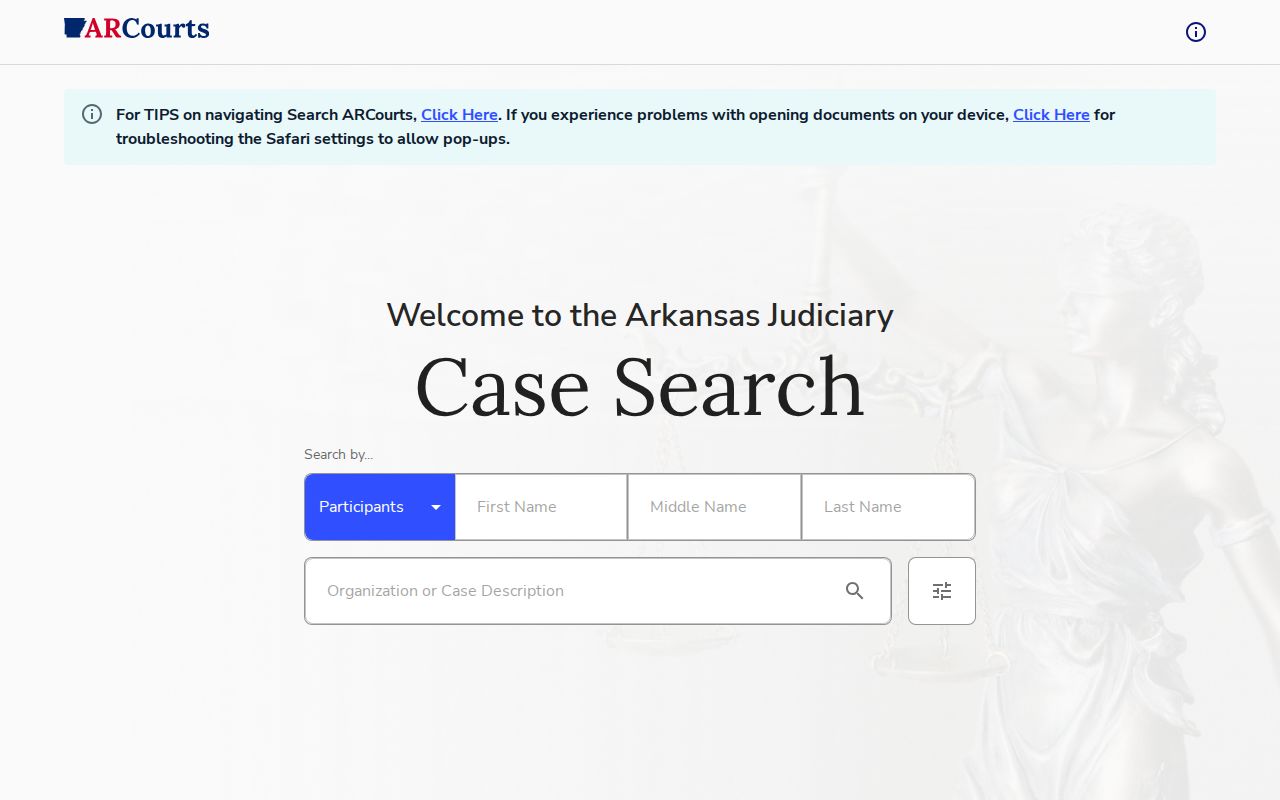
Live search options can shift, and the AOC promises no uniform fields or refresh times. A missing filing or unconfirmed result calls for the court clerk. That office can supply certified copies too.
| Search or result area | What Arkansas public guidance supports | Coverage limit |
|---|---|---|
| Case and citation | Search by the case ID or citation number on court papers. | No single case-number format applies to every court or year. |
| Participants | First, middle, and last name fields; one or two letters search exactly, while longer prefixes can return names beginning with them and aliases. | Results depend on how the name appears in the case record. |
| Detailed filters | Filing date range, case type, docket code, county, and court location controls are documented. | Live dropdown choices are dynamic; no complete static list or result limit is published. |
| Case information | Participants, judge, filings, charges and dispositions, future events, and judgments may appear. | Visible fields differ by court, case, and public-access status. |
| Documents | Some results link to public images. | Imaging and access settings mean a link is not guaranteed for each filing. |
Arkansas District Court Coverage Remains Partial
Every Arkansas Circuit Court runs on Contexte. Most feed extra public case information into the portal. Only some District Courts publish details through Search ARCourts. The AOC paused new limited-jurisdiction implementations in 2022 while it builds a replacement. The Arkansas Judiciary District Courts page describes the lower-court tier, its jurisdiction, and court locations.
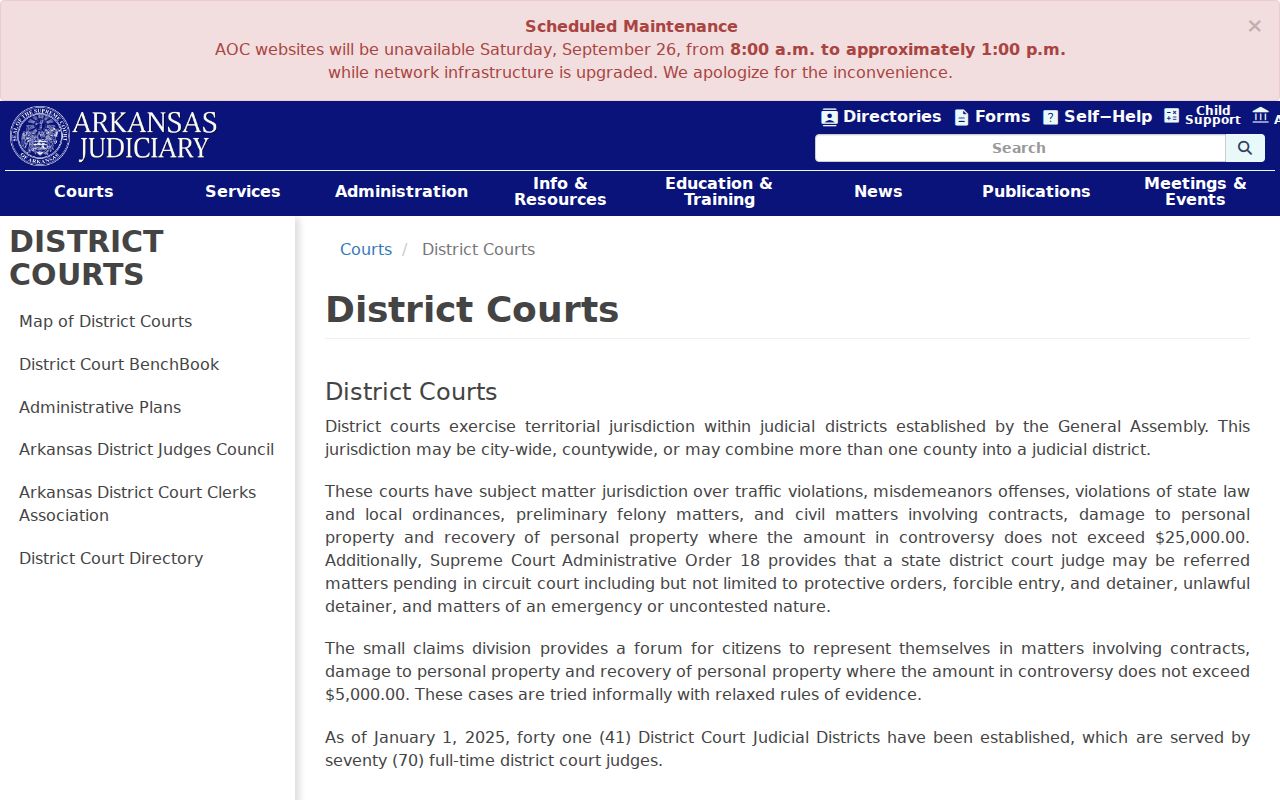
One county can hold more than one court, and some District Court districts span cities or multiple counties. So check the actual Arkansas court location before assuming where a record lives.
From County Docket to Arkansas Index
Arkansas case information begins where it is filed: a Circuit case enters the Circuit Clerk's workflow, while a District case begins with its local court. Search ARCourts displays an available public index or summary; the official Arkansas docket and full record stay with the court. Case flow: County filing › local case-management record › public information in Search ARCourts.
The Arkansas Circuit Clerk directory routes you to the county office that holds Circuit Court records.
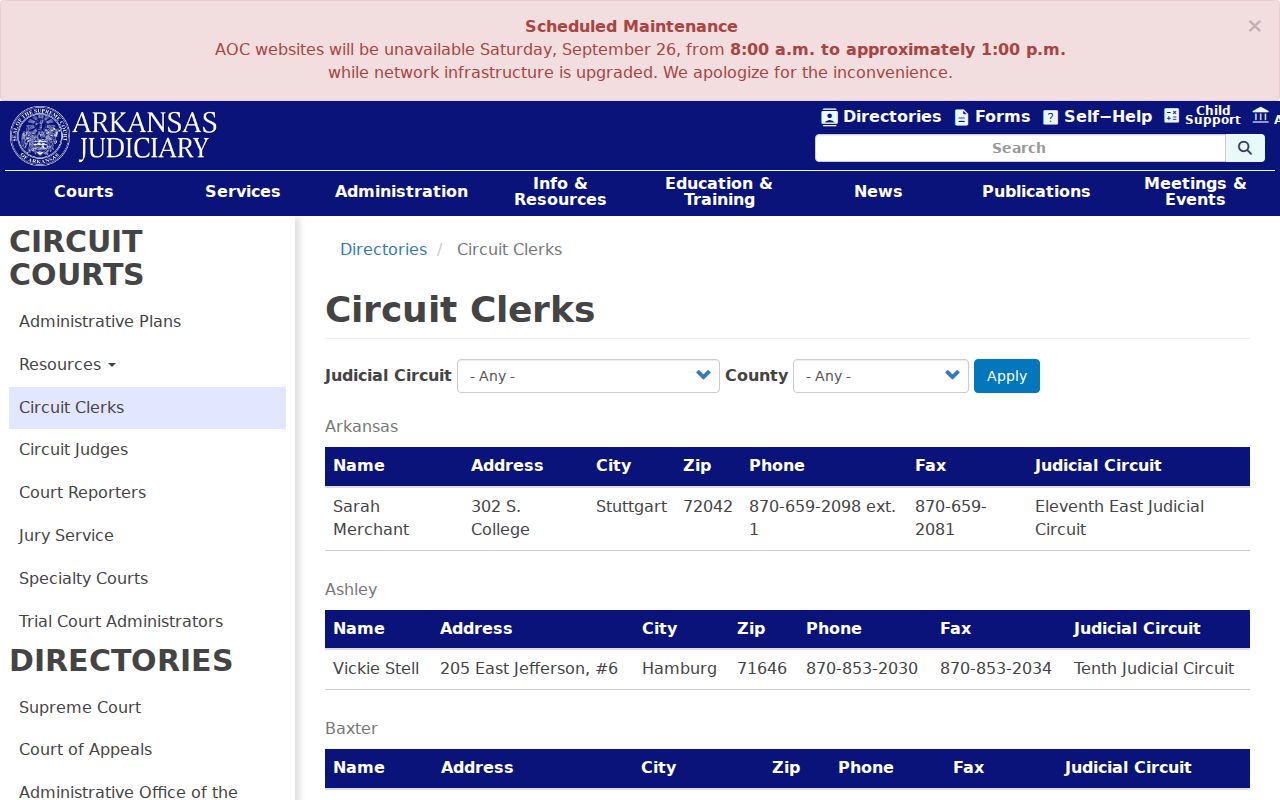
When a result is missing, a District Court does not appear, or a filing needs clerk confirmation, turn to the county directory for local court information. The county pages fill the gap the statewide index leaves.
Arkansas District Court Contact Lists Are Local
Arkansas has no single statewide District Clerk office. Each District Court keeps its own contacts. The AOC District Court directory lists locations along with phone numbers; county pages add local access steps. Traffic, misdemeanor, ordinance, and preliminary-felony records often begin in District Court. The AOC directory provides Arkansas District Court location and contact search.
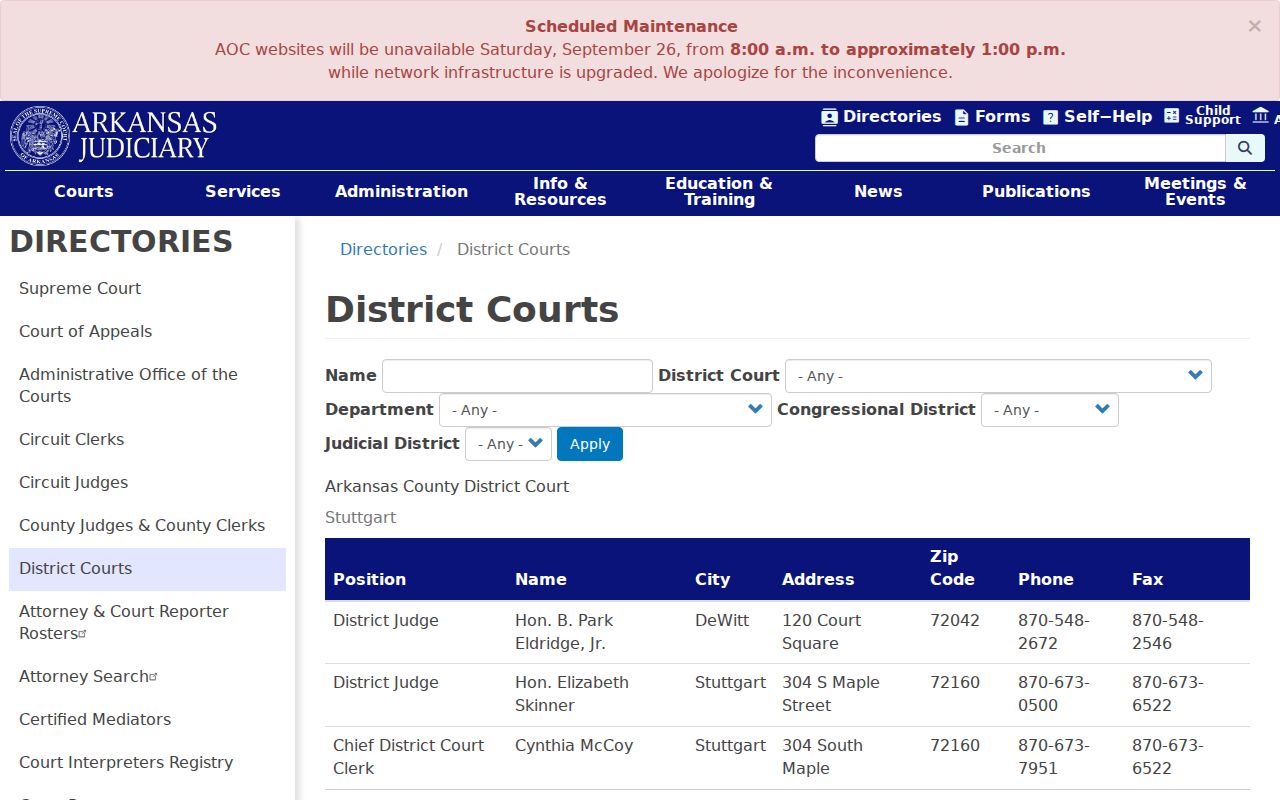
Start with the court name printed on the citation, summons, or filing. Contact that court about its current docket access. The Circuit Clerk does not automatically keep every local District Court record from the same county.
How Tybera eFlex Feeds the Docket
Tybera eFlex is Arkansas's electronic filing gateway for covered state cases. Circuit e-filing began in 2012 and reached every Circuit Court on March 8, 2023. Attorney filing is required where Supreme Court rules apply, subject to exceptions. Eligible self-represented filers may register as well. The Tybera eFlex sign-in and registration page is the filing gateway. It is not a public case-search page.
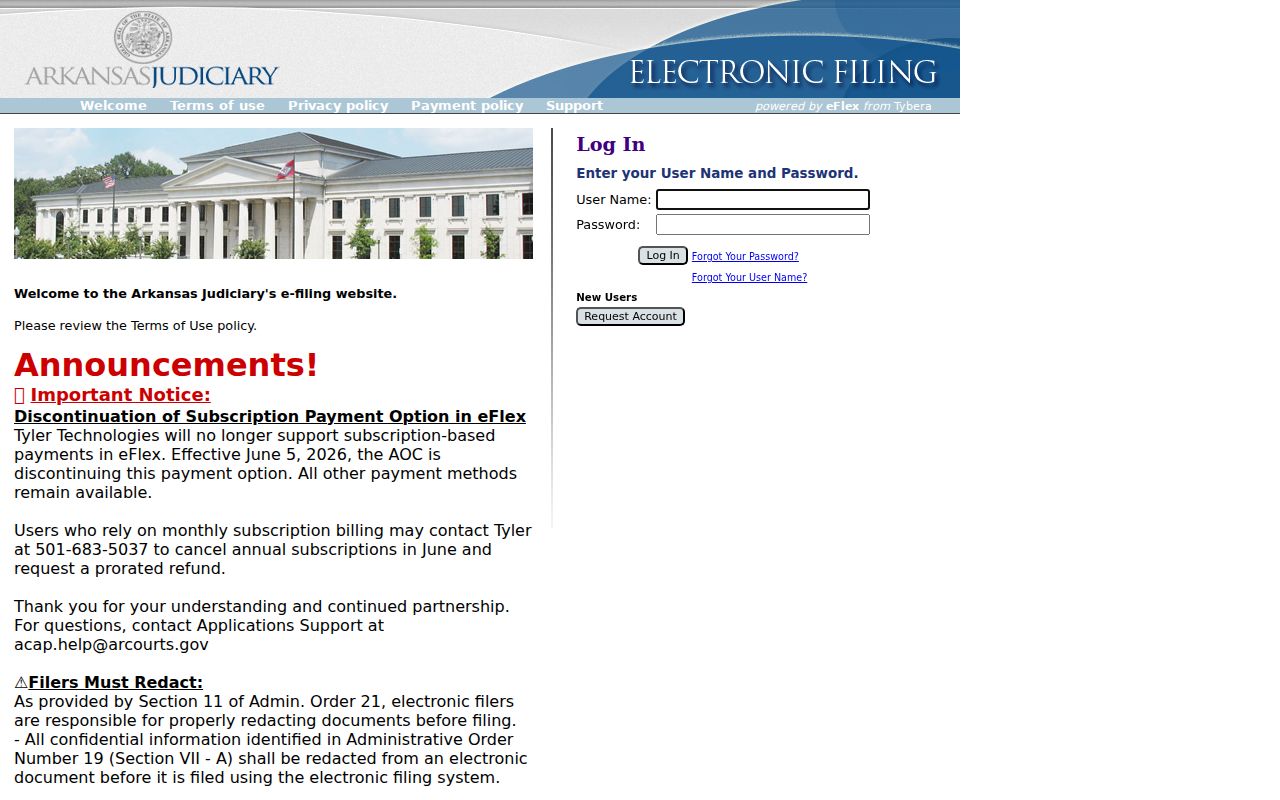
An accepted e-file can become an Arkansas docket event. Public access still depends on court participation, imaging, redaction, and access rules, so a filing title may appear without a PDF. Use Search ARCourts or the local court for case lookup; eFlex is for filing.
Arkansas Build Initiative and District Courts
The AOC Build Initiative is developing a cloud-based replacement for Arkansas's legacy case-management services. In April 2026, selected clerks and judges saw a beta with early criminal and traffic features at selected District Courts.
The AOC Build status describes a staged roadmap, not an operating statewide replacement. Until a court's transition is confirmed, Search ARCourts coverage follows the existing systems, so check the local clerk when a District Court case is missing. A beta announcement means selected testing, not statewide access to a replacement case search.
Statewide Index vs Arkansas County Docket
Search ARCourts works as a statewide index, pulling case information from participating Arkansas courts. It is a finding tool, not the record itself. The full docket, the filed documents, and certified copies all stay with the local court. So use the index to locate a case. Then let the clerk confirm the official record.
Start with the portal. If a result is missing, go straight to the Arkansas county or local court. The same applies if an image is blank, the file is old, or you need certification. Keep in mind that an empty search screen does not prove no case exists.
| Record question | Statewide index | County or local court |
|---|---|---|
| Find a case | Search ARCourts returns public case information from participating courts. | The clerk can check its own case system and identify the proper court. |
| Read the docket | Displays available case entries and summary details. | Maintains the official case record and can confirm docket entries. |
| Open a filing | May link to a public image when the document was imaged and access is allowed. | Can explain local image availability and inspection or copy steps. |
| Get a certified copy | Does not certify a result or document. | The clerk holding the official record handles certification. |
First figure out whether your case sits in Circuit or District Court. Then open the Arkansas county directory for local court and clerk details. An index result only points the way; the clerk confirms the official docket and record.
What an Arkansas Search ARCourts No-Result Means
A no-result screen in Search ARCourts can mean several things. The court may not participate. A filter may be off, or a name may be spelled differently. The file may predate the system, or access may be limited. The AOC publishes no universal historical start date and no set refresh delay. So widen the net. Try the full Arkansas case or citation number. Lengthen a short name, drop optional filters, and double-check the court location. Still nothing? Call the Circuit Clerk or District Court clerk. Restricted matters may simply never appear in public view. A general FOIA request cannot override a sealing rule. Arkansas Administrative Order 19 governs court access. The court itself decides any request for excluded material. Treat a no-result screen as a prompt, not a verdict: check location, participation, spelling, age, and access status.
How Arkansas Courts Went Digital
Arkansas courts reorganized under Amendment 80. It took effect in 2001. An intermediate appellate tier arrived earlier, when the Court of Appeals was created in 1979. E-filing spread more recently: Circuit e-filing reached every Circuit Court in 2023. Then, in January 2024, Search ARCourts replaced Public CourtConnect as the state's case lookup service. Even so, neither change put every case file online. The retired Public CourtConnect help page directs users toward current Search ARCourts.
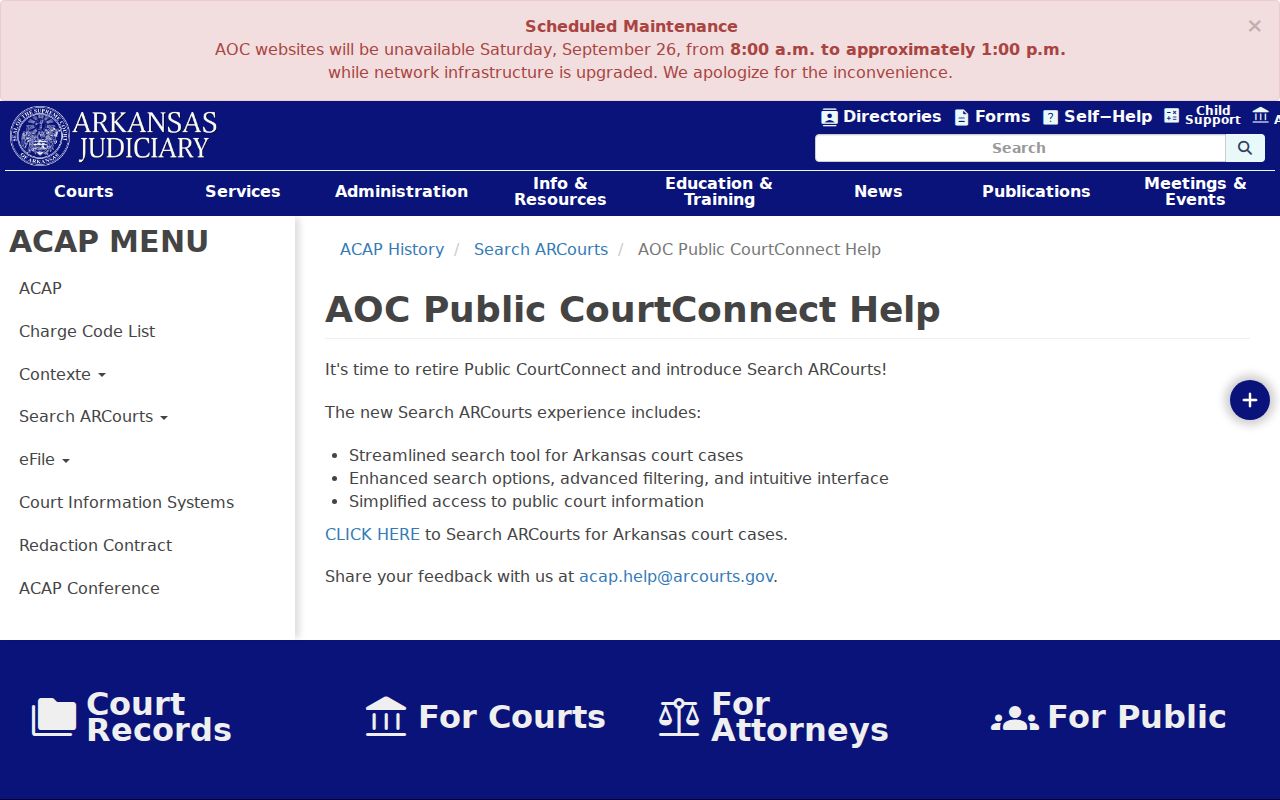
Older Arkansas help pages may still use the former name. Current case lookup starts with Search ARCourts or with the local court that holds the record.
Arkansas Appellate Appeals Have Separate Dockets
An appeal creates a record of its own. The Circuit docket may list the notice, record preparation, and transmission, while the Arkansas Supreme Court or Court of Appeals assigns a separate case number and keeps the briefs, motions, arguments, and opinion. The appellate Clerk of the Courts holds those filings and records. A docket search at the trial court stops at the notice. The Arkansas Court of Appeals publishes its own argument and sitting schedule.
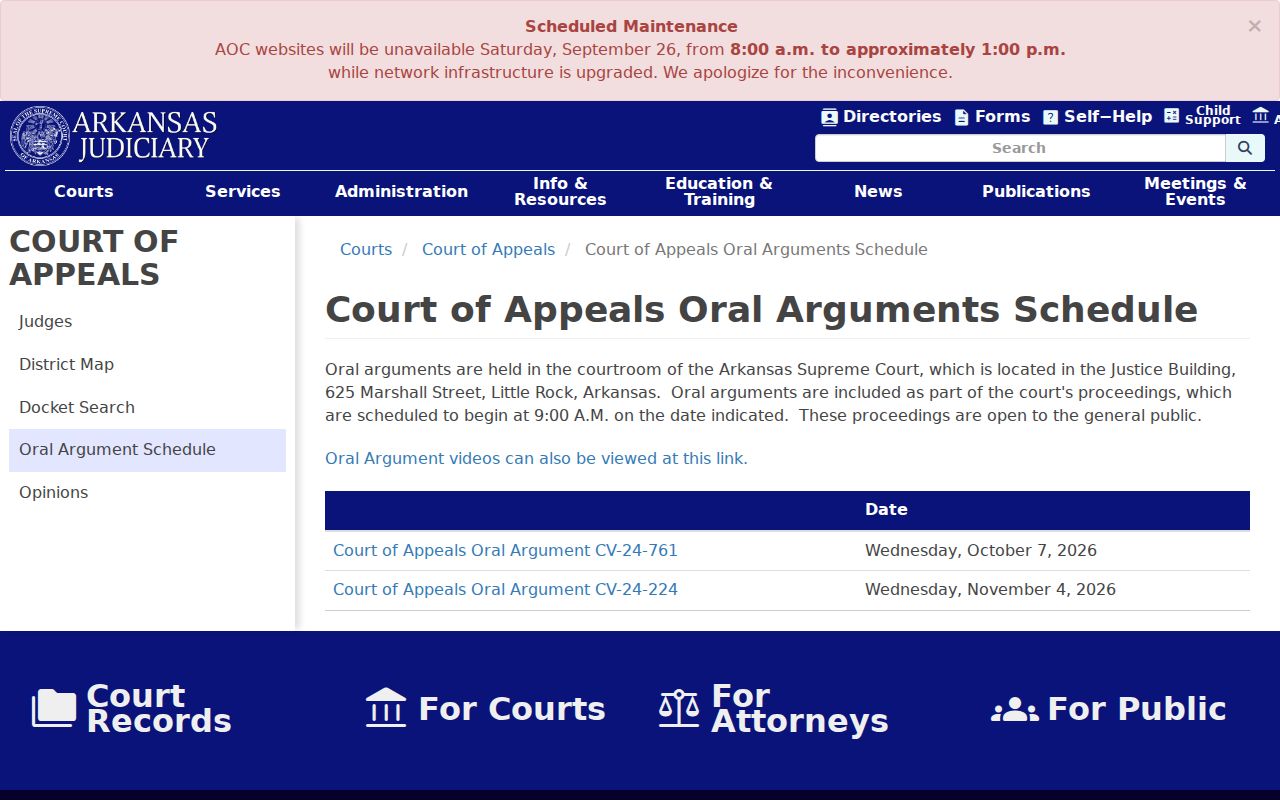
Arkansas's appellate calendar lists argument events, not county trial settings. Because the Circuit Clerk keeps the original case, a full lookup may require both dockets.
Arkansas Appellate Docket Fees and Records
Appealing a case in Arkansas carries its own charges. The appellate fee page lists $165 for a conventional civil or misdemeanor appeal and $185 for an electronic-record appeal. A felony appeal carries no filing charge. Review or rehearing petitions in specified matters cost $25. These appellate fees sit apart from county copy fees, so check the current schedule before you file. The Arkansas appellate clerk's fee page separates Supreme Court and Court of Appeals filing services.
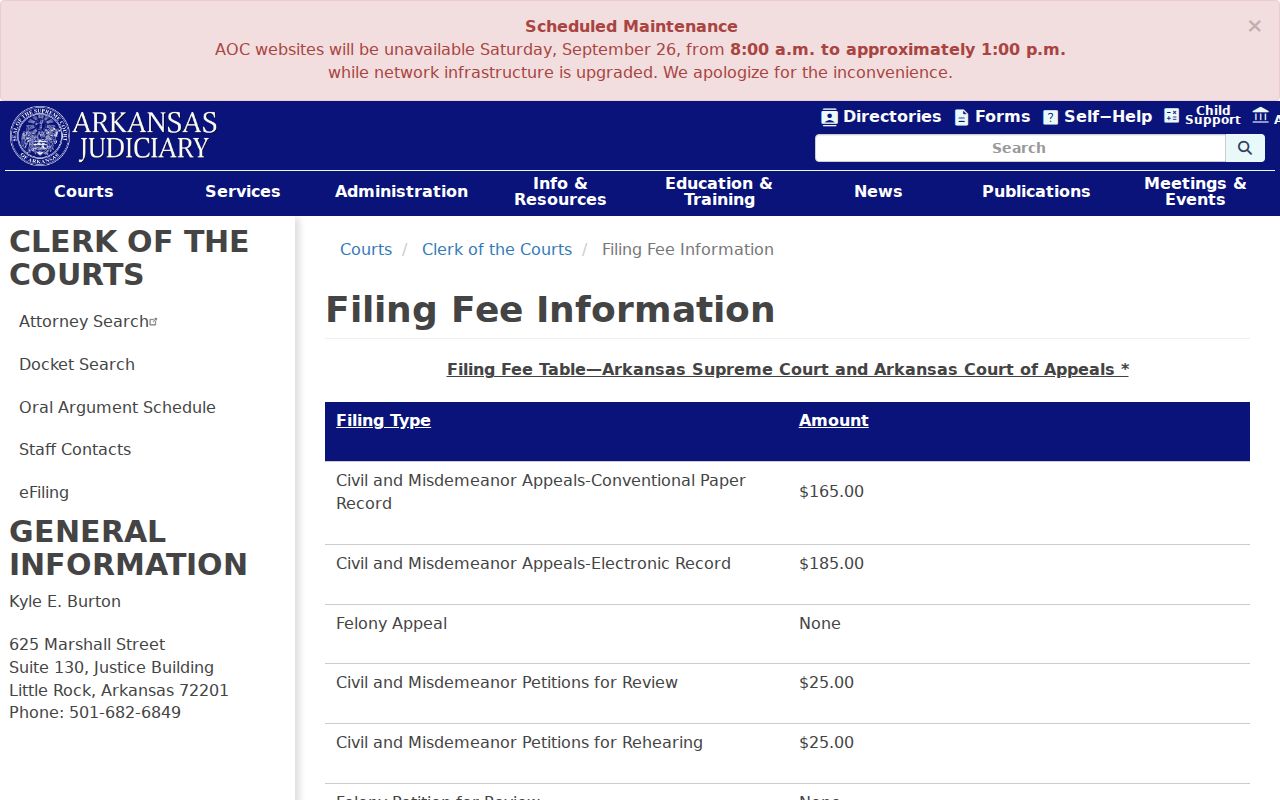
Go to the appellate clerk for an appeal, and to the Circuit Clerk for the underlying trial docket.
Arkansas AOC Supports CIS and ORJS
The Arkansas Administrative Office of the Courts backs the judiciary in two ways. Its Court Information Systems Division supports Contexte, Search ARCourts, eFlex, and online access. The ORJS office publishes statistics and takes compiled-data requests. Neither one holds a county case file.
Administrative Order 8 governs statistical reporting. That is why a statewide count can cover more courts than public case-detail search does. Filings, charges, events, and unique cases each count as different units. Use the AOC administration page, the ORJS data-request route, and the Supreme Court orders for system resources. For a case record, ask the local clerk.
AOC technology staff can explain the statewide tools. The filing court stays the right contact for a case-specific record. It is also the place to ask about a current hearing date.